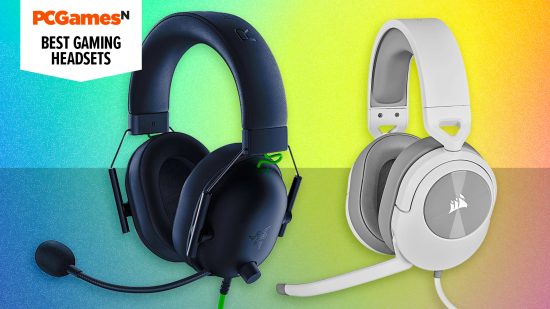

The best gaming headset can improve your experience of your favorite games, whether you prefer playing on your own or with friends. They’ll ensure that you’re able to appreciate every little detail of a game’s intricate soundscapes while making it a lot easier to communicate with friends and teammates online.
After hours of testing, playing, and listening (you’re welcome) we’ve come up with this list of gaming headsets your money can buy. Whether you want an affordable option or a headset with the best battery and serious style, we’ve got you covered on a range of needs. Trust our expert advice to help you find the best gaming headset for your needs, from all the big brands including Razer, Corsair, Asus, and Sony.
You don’t need to break the bank to bag a brilliant gaming headset for your gaming PC. However, spending that little bit extra gives you extra features like simultaneous wireless connections, active noise-canceling, and virtual surround sound. We’ve got a separate guide dedicated to the best wireless gaming headset, and if you’re looking to fill a room with sweet sounds, we’ve also tested the best computer speakers and soundbars that’ll make your desk rumble.
Why you can trust our advice ✔ At PCGamesN, our experts spend hours testing hardware and reviewing games and VPNs. We share honest, unbiased opinions to help you buy the best. Find out how we test.

Razer BlackShark V2 Pro
Best gaming headset overall
 Today’s best deals
| Wireless | Yes, with Bluetooth |
| Connectivity | USB-C for charging only |
| Drivers | TriForce Titanium 50mm |
| Frequency range | 12Hz – 28,000Hz |
| Weight | 320g |
- Titanium 50mm drivers
- Stunning design
- High-band microphone is XLR quality
- The price is a little high
- No wired connections
The Razer BlackShark V2 Pro is a product that claims to do it all as a gaming headset, but actually delivers. First and foremost, the wideband microphone is a joy to use, and you’ll never have teammates complain about your voice quality ever again.
Razer has essentially put an XLR quality microphone in the BlackShark V2 Pro, crazy as that may sound. Our testing shows that it delivers on the advertised features and sets a whole new standard for gaming headset microphones.
Fear not, as the Razer BlackShark V2 Pro isn’t just a fancy mic and little else, it also brings the same quality audio that we’ve come to expect from Razer over the years. TriForce Titanium 50mm drivers bring the noise with crystal clear clarity and it maintains this even at higher volumes where disruption tends to occur.
Comfort is also king, as despite tipping the scales at 320g, Razer’s lightweight framing helps make the V2 Pro feel far lighter. A winner on all fronts, the only downside to the V2 Pro is the lack of a wired connection option.
Read our Razer BlackShark V2 Pro review for more.

ASUS TUF Gaming H3
Best budget gaming headset
Today’s best deals
| Wireless | No |
| Connectivity | 3.5mm analog jack |
| Drivers | 50mm |
| Frequency range | 20Hz – 20,000Hz |
| Weight | 298g |
- Comfortable
- Solid audio
- Tough
- Can’t remove the microphone
The Asus TUF Gaming H3 is a budget gaming headset gladiator that doesn’t compromise on quality, and it gets a hell of a lot right for under $50 (£60). Solid build, subtle good looks, and great audio quality help this particular pair of cans steal the budget crown, serving as proof that you don’t have to spend a fortune to upgrade your gaming PC setup.
Off the bat, the Asus TUF Gaming H3 looks a lot more expensive than it actually is, and its build quality will fool you into believing it does. Its flexible headband and solid construction provide the durability needed to withstand intense daily use, and our tests confirm it’s as hardy as the brand name implies.
Many budget options struggle to strike a balance in terms of audio fidelity, but the TUF Gaming H3 provides excellent clarity using Asus’ 50mm Essence drivers. You won’t have to deal with muddy bass spoiling your mids, and treble rings true while avoiding sounding tinny. In addition, it wields a superb microphone that surprised us while testing, providing levels of capture clarity we’d usually expect from a more expensive headset.
There aren’t many cheap headsets out there that hit as hard as the Asus TUF Gaming H3, and it deserves its spot at the gaming audio table. Sure, we’ve used various other headsets that boast fancy features, but even premium options should feel threatened by the H3’s $49.99 (£59.99) price tag.
Read our Asus TUF Gaming H3 review.

HyperX Cloud 3
Best mid-tier gaming headset
Today’s best deals
| Wireless | No |
| Connectivity | 3.5mm analog jack |
| Drivers | 53mm |
| Frequency range | 10Hz – 21,000Hz |
| Weight | 320g |
- Brilliant all-rounder
- Great with games, good with music
- Not too pricey
- Get uncomfortable in long sessions
- Bass profile could be better
If you aren’t looking for something that’s super fancy and expensive or something that’s really cheap, then we recommend the HyperX Cloud 3 – the baby bear choice, if you will. It’s a great headset that will serve you well, but it’s not quite up to the same standard as some of the more premium options on this list (most notably, with its bass profile).
It does look absolutely fantastic though, so it’s a good choice if you want to look stylish on streams – or just want to feel fabulous when gaming alone at home. It is a slightly heavier build though, so it can start to feel like a bit of a burden if you like to play for hours and hours on end.
Games and music both sound great through it though and ultimately that’s the most important thing for a headset. It’s more expensive than our truly ‘budget’ choice above, but it’s still really cheap for a headset and a notable step up.
Read our HyperX Cloud 3 review.

Logitech G Astro A50 X
Best multi-platform gaming headset
Today’s best deals
| Wireless | Yes |
| Connectivity | 3x HDMI 2.1 ports, USB, |
| Drivers | 40 mm PRO-G GRAPHENE |
| Frequency range | 20-20,000 Hz |
| Weight | 363g |
- Playsync is a game-changer
- Great microphone
- All-round audio quality
- Cable managment can be a nightmare
The Astro A50 X is the go-to headset for anyone rocking multiple game consoles alongside a gaming PC and mobile devices. Playsync is a game changer, bringing together all platforms into one low-latency wireless docking station, capable of video passthrough of up to 4K/120Hz via HDMI 2.1. The A50 X docking station can even change your display source at the press of a button for the ultimate convenience.
Using Logitech’s 40mm Pro G Graphene audio drivers alongside Dolby Atmos, there’s more than just convenience to the Astro A50 X, and you’d expect as much given the premium price. Likewise, a crystal clear microphone, capable of beating out some standalone options, is also included. Both the audio and microphone are fully customizable thanks to the Logitech G Hub app for PC and mobile, and you also have access to community EQ setups if you’re not keen on playing around with the settings yourself.
If you need more than just the 2.4GHz LIGHTSPEED connections available, Logitech also packs in Bluetooth to allow simultaneous connections, meaning you could be listening to music on your phone while owning lobbies on Xbox Series X or PS5. All of this comes packed into a super comfortable and light frame, available in either black or white, with 24-hour battery life and contact charging available via the docking station.
Read our Logitech Astro A50X review.

Corsair HS65 Wireless
Best wireless gaming headset
Today’s best deals
| Wireless | Yes, with Bluetooth |
| Connectivity | USB-C for charging only |
| Drivers | 50mm neodymium |
| Frequency range | 20Hz – 20,000Hz |
| Weight | 275g |
- Heaps of style
- 2.4GHz and Bluetooth
- Decent mic quality
- Mic isn’t detachable
- No 3.5mm
The Corsair HS65 Wireless feels like a familiar friend, as its wired sibling is also one of our favorite headsets. The latest edition to the company’s headset family embodies style, quality, and functionality, and manages to cut the cord without much compromise.
Both the wireless version and HS65 Surround have good looks on their side, with mesh detailing on the cups adding a fashionable flair. Pivoting cups mean you’ll also be able to comfortably wear the headset around your neck in between gaming sessions, and if the mic was detachable, we’d probably take it with us outside as an on-the-go audio solution.
Aesthetics aside, the HS65 Wireless boasts great fidelity and balanced audio that delivers on multiple fronts. Its 7.1 surround sound and spacial audio capabilities are present to enhance the best new PC games, but it’s going to bring an immersive level of audible delight to your entire Steam library using Corsair’s impressive 50mm drivers.
The HS65 Wireless is armed with both 2.4GHz low latency connectivity and Bluetooth, and the latter makes it, in our opinion, one of the best Steam Deck accessories. Whether you’re gaming on the go or on the couch, you’ll be able to stream sweet PC sounds to your ears for up to 24 hours on a full charge, while a quick 15-minute zap will provide you with six hours of playtime. Great battery life is just one of the reasons why Corsair’s cordless headset is our current favorite and deserves a spot at the best wireless gaming headset table.
Read our Corsair HS65 Wireless review.

Corsair HS65 Surround
Gaming headset with the best mic
Today’s best deals
| Wireless | No |
| Connectivity | 3.5mm analog jack (surround sound via software) |
| Drivers | 50mm neodymium |
| Frequency range | 20Hz – 20,000Hz |
| Weight | 280g |
- Comfortable to wear
- Great 7.1 surround sound
- Ear pads don’t totally seal
- Can’t be used wirelessly
We already spilled the beans above about how much we like the Corsair HS65 Surround while highlighting its newer wireless counterpart. Yet, the original wired model has a few unique tricks up its sleeve, as it matches style and fidelity with exceptional mic quality.
Headsets understandably struggle to hold up against the best gaming microphone options, but the Corsair HS65 Surround offers incredible capture performance at a low price. This stylish pair of gaming cans boasts levels of quality you’d expect from premium alternatives, and its sense of style proves you don’t need to clad all gaming gear in RGB and edgy aesthetics.
We’ve already covered the fact that the Corsair HS65 Surround is ridiculously stylish, and despite its $69.99 (£79.99) price tag, it looks almost exactly like the wireless version. It’s actually a bit of a trendsetter, as the latter model has its wired sibling to thank for its sense of fashion. It wears the same attractive metallic mesh design, and its pivoting cups provide the same level of wearable comfort.
We don’t find wires particularly offensive, and the HS65 Surround’s 3.5mm jack adds a pleasing element of versatility, facilitating compatibility with a variety of devices. You’ll have to use the included USB sound card to tap into the headset’s 7.1 surround sound capabilities, but if you’re looking for a pair of cans that’ll connect to the Steam Deck and the best PC controllers like the PS5 Dualsense, you’ll be able to do that without additional adapters.
Read the Corsair HS65 Surround review.

EPOS H6Pro
Best gaming headset for travel
Today’s best deals
| Wireless | Yes, with Bluetooth |
| Connectivity | 3.5mm analog jack, USB-C charging and audio |
| Drivers | 42mm |
| Frequency range | 10Hz – 30,000Hz |
| Weight | 322g |
- Super comfortable
- Removable boom mic and internal mics
- Incredible sound and mic quality
- Expensive
- Mic splitter could be better
The H6 Pro is an incredibly versatile wireless gaming headset that has literally every current mainstream feature you could want from a gaming headset, all for what is generally these days a fairly low price (it was expensive at its initial launch). You get USB wireless, Bluetooth, analog 3.5mm, and wired USB audio connections, plus there are detachable boom and internal mics, along with both virtual surround and stereo audio output.
With either the boom mic or internal mics you can also activate active noise canceling so you can easily block out the din around you when traveling. The headset’s also lightweight and compact too, and it’s very comfortable as well. Battery life is pretty decent too, while overall sound quality is top-class, other than a slightly fiddly mic splitter (which is really us splitting hairs) there’s not a lot to criticize.
Read our full the EPOS H6Pro review.

Roccat Syn Max Air
Best RGB gaming headset
Today’s best deals
| Wireless | Yes, with Bluetooth |
| Connectivity | USB-C for charging only |
| Drivers | 50mm |
| Frequency range | 20Hz – 20,000Hz |
| Weight | 325g |
- RGB lighting
- Audio quality and features
- Charging dock
- Price feels too high
- Microphone picks up ambient noise
We love some RGB, and the Roccat Syn Max Air implements this beautifully across not only the headset itself but also the handy magnetic charging dock.
Aesthetics aside, when we reviewed this headset, we found the comfort to be somewhat missing. If it happens to be the right fit for you, there is very little about the Syn Max Air that misses, beyond its microphone that is a little too sensitive to ambient sound.
Roccat gets its 50mm driver tech from parent company Turtle Beach, meaning there is an incredible level of quality on show here, including the addition of Superhuman Hearing, a must-have feature for shooters. 3D Audio is also in play, and offers the level of immersion to take all your gaming to the next level.
Read our Roccat Syn Max Air review for more.

Razer Kraken V3 HyperSense
Most immersive gaming headset
Today’s best deals
| Wireless | No |
| Connectivity | USB audio |
| Drivers | TriForce Titanium |
| Frequency range | 20Hz – 20,000Hz |
| Weight | 344g |
- Unique bass-driven haptic feedback
- Detailed audio
- Adjustable EQ levels with Razer Central
- Requires tinkering
- Surround sound Windows-only
The idea of a vibrating headset might sound gimmicky, but hear us out, as the Kraken V3 Hypersense more than justifies haptic accessories. In a way, Razer’s rumbly tech feels almost like a subwoofer, as it adds a sense of audio physicality to the device’s 7.1 surround sound capabilities (though 7.1 is Windows-only). If you’re a fan of FPS experiences like Halo Infinite, then you’ll love Kraken V3 Hypersense’s dedication to immersion, as its haptics transform every gunshot and explosion into directional, tactical information.
Haptics aside, the Kraken V3 also is an exceptional headset in its own right. A mix of durable plastics, metals, and leatherette gives the V3 Hypersense a premium feel, while its detachable mic boasts clarity and efficient noise reduction.
Of course, if you’re a fan of colorful accessories, then you’ll be pleased to know that the Kraken V3 Hypersense is clad in Chroma RGB, and the company’s lighting tech looks better than ever.
Read the Razer Kraken V3 HyperSense review.

Steelseries Arctis Nova Pro Wireless
Best premium gaming headset.
Today’s best deals
| Wireless | Yes, with Bluetooth |
| Connectivity | USB-C for charging only |
| Drivers | 40mm Neodymium |
| Frequency range | 10Hz – 40,000Hz (wired), 10 – 22,000Hz (Wireless) |
| Weight | 336g |
- Great sound with AI-driven noise cancellation
- Swappable, rechargeable batteries
- Comfort levels are brilliant for long sessions
- Steelseries GG software is bloated
It’s not often that the only negative we have for a headset is the software you use with it, and in the case of the SteelSeries Arctis Nova Pro Wireless, it’s truly the only fault we could find after weeks of testing.
The price may turn away potential customers, but the reality is that the Nova Pro Wireless is worth it. If you want to improve your gaming experience, few headsets can compete. A big factor in this is the AI audio cancellation. Rather than being a feature you turn on and off, the Nova Pro Wireless is listening to your surroundings and making adjustments on the fly.
Simultaneous connection, 40mm drivers, 20-hour battery life, and a reasonable 336g weight all combine to create what we called “The total package” during our review. The final point in favor of the Arctis Nova Pro Wireless is their customizability, as you can purchase booster packs for $34.99 to change the earcups and headband, a nice touch even if it comes with a cost.
Read our SteelSeries Arctis Nova Pro Wireless review for more.
How to choose the best gaming headsets
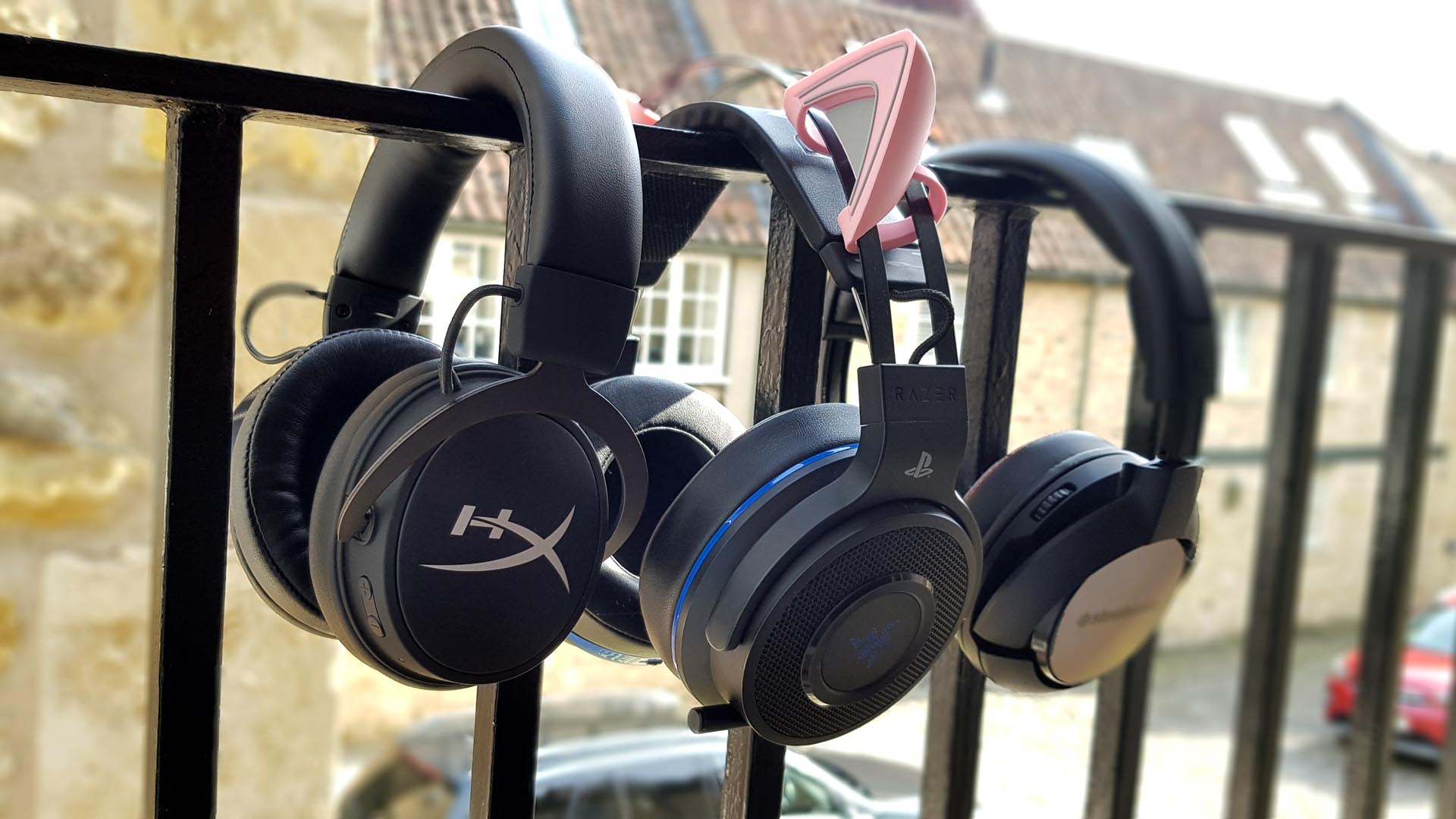
What’s the right headset for you? Great question! Think about how much you’re willing to spend because the chances are, the more you spend, the better the audio and build quality and features you’ll get.
If having crystal clear audio quality is the most important thing for you, we recommend looking for a 50mm driver, because these are typically capable of a greater frequency range than 40mm drivers. This isn’t a universal rule though (and depends on how the manufacturer handled the implementation and build), but fortunately, we’ve independently tested every headset on this list.
For wireless headsets, battery life is a big issue. It’s not always advertised that certain wireless connections will drain the battery quicker than others, while some headsets have the forethought to include removable batteries so you never have to stop and charge.
Lastly, but potentially most importantly, you have to consider how comfortable each headset is to wear. This is the hardest thing to quantify since we all have differently shaped heads, but we recommend reading lots of reviews (including our own) to get an idea of how each headset sits upon each person.
Got any more questions? Check out the FAQs below:
Best gaming headset FAQs
Wired vs wireless gaming headsets
While things were different a few years ago, wireless models now have almost zero caveats compared to wired models. Thanks to super fast 2.4GHz wireless connections, latency is comparable to a wired connection, and improved batteries mean wireless models such as the Sennheiser GSP 370 can offer up to 100 hours of battery life.
Do gaming headsets have surround sound?
While headsets such as the Razer Thresher Ultimate offer native surround sound thanks to built-in Dolby Surround, it’s possible to get virtual surround sound on any headset on Windows 10. You just need to enter the sound tab under settings, before clicking “Device properties” under output and enabling “Spatial sound”.
What’s the best surround sound gaming headset?
Of all the gaming headsets we’ve had the chance to test, the SteelSeries Arctis Nova Pro is easily the best for surround sound. If that’s your biggest deciding factor, make that your choice. All-round, it’s a truly fantastic premium headset.
Is 7.1 surround sound better for gaming?
Yes. 7.1 surround sound provides detailed positional audio, which makes it a lot easier to tell exactly where (in-game) footsteps, gunshots, explosions, or whatever else, are coming from. Not only does this help to make single-player games more deeply immersive, but it also helps give you a slight competitive edge when playing online.
Closed-back vs open-back gaming headsets
Open-back headsets feature a design that allows air to flow through the ear cups, resulting in a more natural soundstage. On the other hand, closed-back headphones are built with noise cancellation in mind, as both ear cups are completely sealed.
If you’d prefer to drown out the outside world while you game, you should probably opt for a closed-back headset. However, if you’re looking to maximize clarity and you’re playing in a quiet room, open-backed options like the EPOS H6Pro can elevate your gaming PC’s audio fidelity tenfold.
What do pro gamers use for headsets?
There are lots of pro gamers, and there’s no single gaming headset that they all use. However, they typically stick with the big brands, like Razer, Corsair, and HyperX. If you’re after a specific product recommendation, the Razer BlackShark V2 Pro is popular among professional gamers and is also the headset that gets our highest recommendation.
Why do pro gamers use two headsets?
If you’ve watched any gaming tournaments before, you may have noticed that some players have two pairs of headphones. The reason for this is that they serve different purposes:
- One headset is there for game sound and communication with teammates
- One headset is there for noise cancellation, as these sorts of events typically take place in very noisy arenas
The majority of gamers aren’t going to need a second headset, but if you’re planning on taking part in a tournament then it’s something to consider.
For more ways to enhance your gaming experience, read our guides on the best Bluetooth speakers and the best gaming monitors – they’ll help ensure that you’re enjoying the sound and visuals of your games as much as possible.